Water-Wise Backyard Gardening for Australian Summers
Long dry spells and water restrictions are part of gardening in Australia. Here is how to keep a backyard alive and attractive without running the hose every evening.
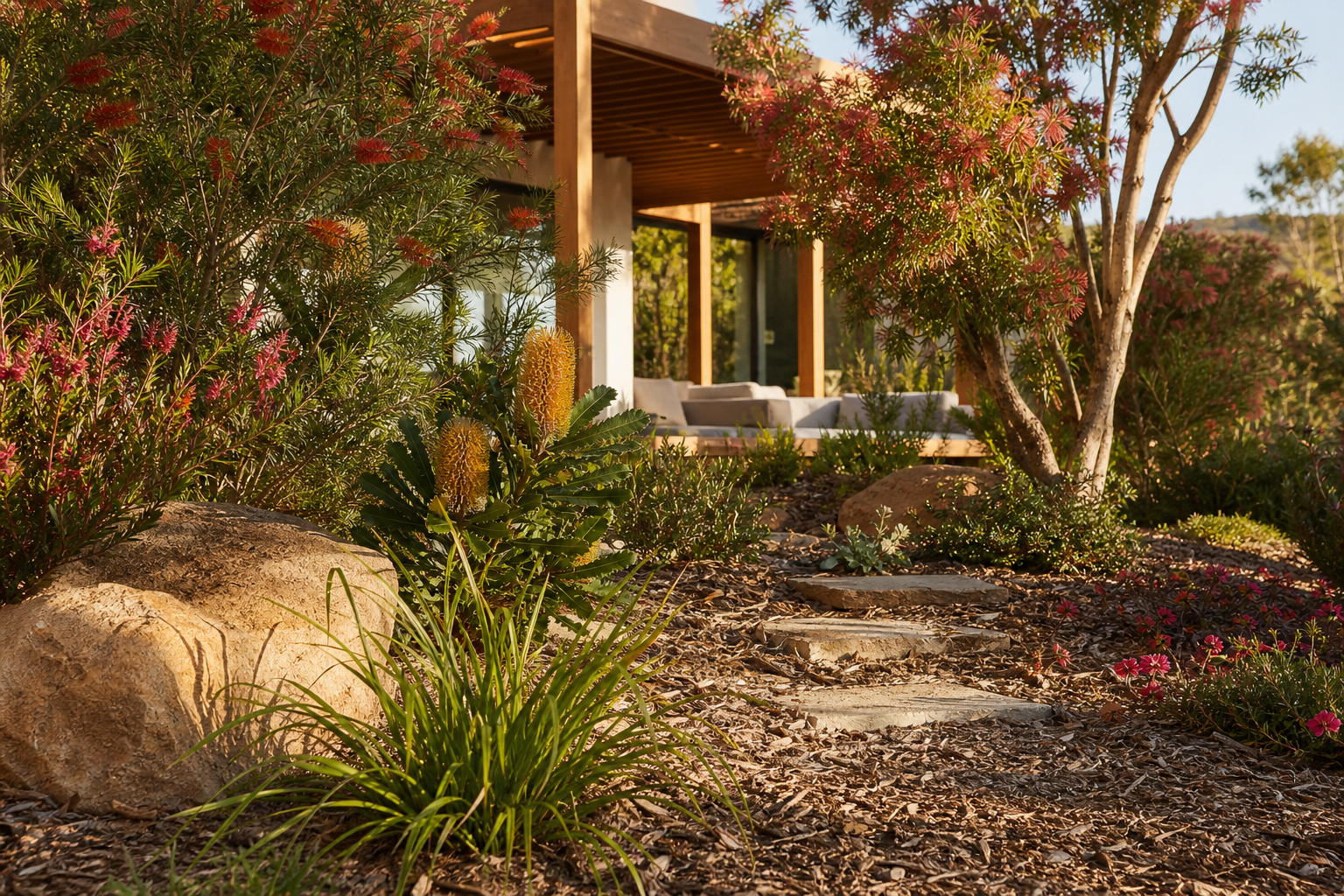
Accept the Climate Before You Fight It
I learned this the hard way in a Melbourne rental: English-style borders of thirsty perennials do not survive a January heatwave on sandy soil. Australian gardening — whether you are in Perth's dry heat, Brisbane's humid summers, or Tasmania's cooler pockets — means designing for irregular rain and hard sun.
Water-wise is not "bare dirt and three rocks." Done well, it is colour, habitat for birds, and a lawn bill that does not make you wince when the quarterly statement arrives.
Group Plants by Thirst, Not by Colour
The fastest way to waste water is mixing deep-rooted natives with shallow-rooted exotics in one bed. Put moisture-lovers together near a tap or tank. Keep drought-tolerant species on their own zone where you water rarely once established.
First year rule: Even tough natives need regular watering while roots spread. Year two, taper off. By year three, many should cope with rainfall alone except in extreme dry spells.
Natives That Earn Their Space
These vary by state — always check local nurseries — but these performers show up reliably across many regions:
Eastern & Southern States
- Grevillea — Flowers attract honeyeaters; many cultivars suit small gardens
- Banksia — Structural cones, deep roots, handles poor soil
- Kangaroo paw — Sharp colour; replant every few years in humid areas to avoid black ink disease
- Lomandra — Strappy grass substitute that never needs mowing
Western Australia
- Corymbia ficifolia (red flowering gum) — Small tree, spectacular summer colour where frost is mild
- Eremophila (emu bush) — Silvery foliage, tough as nails once settled
- Scaevola — Ground cover for cascading over retaining walls
Tropical North
- Frangipani — Deciduous in dry season; iconic and low water once mature
- Bougainvillea — On a fence, not near foot traffic (thorns)
Ask for local provenance stock when available — plants grown from seed collected nearby often handle your soil better than generic nursery lines.
Mulch Like It Matters (Because It Does)
Apply 7–10 cm of chunky organic mulch — wood chip, bark, or sugar cane — keeping it away from plant stems. Mulch cuts evaporation by up to 70% in hot weeks and suppresses weeds that steal moisture.
Refresh partially each spring rather than letting it bake into a waterproof crust. Rake it loose after heavy rain.
Irrigation Without Waste
- Drip line beats overhead sprinklers — water goes to roots, not leaves or pavement
- Water early morning (before 9 am in most states) to reduce evaporation
- Check your council website for water restriction stages — many allow drip even when sprinklers are banned
- A rainwater tank connected to downpipes pays back faster than people assume, especially for vegie beds
Soil wetting agents help on hydrophobic sandy or long-dry potting mix — useful once, not a substitute for mulch.
Lawns: Shrink or Switch
Traditional couch and kikuyu grass drinks heavily. Options:
- Reduce lawn area — replace strips with ground cover or gravel paths
- Let lawn brown in drought — it often greens up when rain returns
- Consider buffalo grass or native ground covers in new plantings
A small lawn for kids and a dog is reasonable. A full suburban quarter-acre of turf in Perth without bore water is a lifestyle choice, not a requirement.
Fire-Aware Gardening (Bushfire Zones)
If you live in a designated bushfire-prone area, spacing, gravel breaks, and avoiding flammable mulch near the house matter more than any single plant choice. Contact your state rural fire service for specific clearance guidelines — they vary and they save lives.
Start Small This Season
Pick one bed. Mulch it properly. Plant five natives suited to your postcode. Measure water use for a month compared to last year. Expand what works. Australian gardens look best when they belong to the place — not to a magazine from another hemisphere.