Native Plants for Low-Maintenance American Landscaping
Tired of watering a lawn every weekend? Native plants fit your local climate, feed pollinators, and cut yard work without looking wild or neglected.
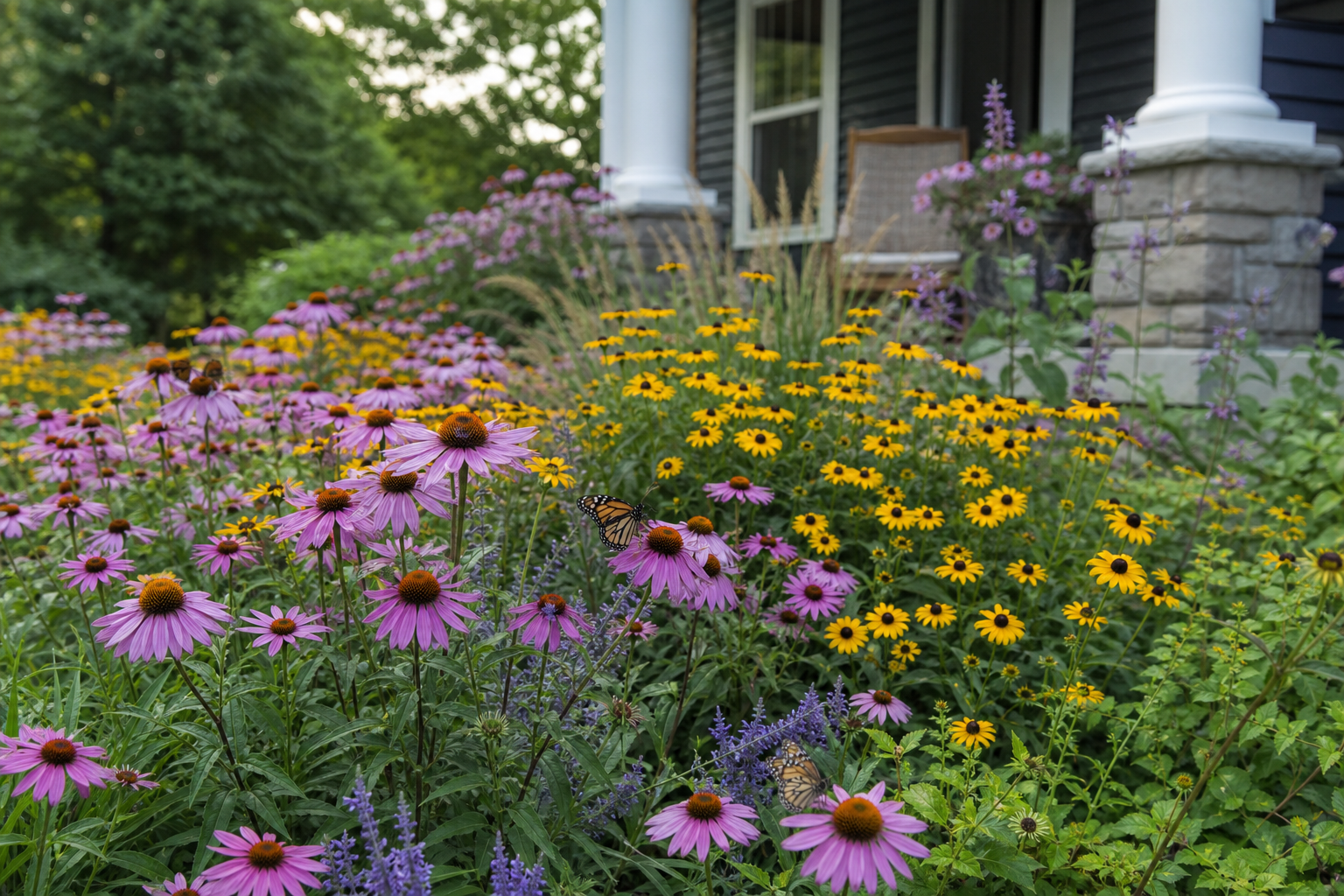
Why Native Plants Beat a High-Maintenance Lawn
Exotic ornamentals look polished in a nursery—but they often need constant watering, fertilizer, and pest sprays once they're in your yard. Native plants grew up in your region's soil, rainfall, and temperature swings. They've already solved those problems.
That doesn't mean zero work. The first year requires watering while roots establish. After that, most native gardens need a fraction of the time you'd spend mowing, edging, and fertilizing turf. Pollinators show up. Birds follow. Your water bill drops.
If you're skeptical, start small: replace one strip of lawn along a driveway or fence line. You'll see the difference by autumn.
Regional Picks That Actually Perform
These aren't exhaustive lists—they're reliable starting points you can find at regional nurseries or native plant sales.
Northeast & Midwest
- Purple Coneflower (*Echinacea purpurea*) — Handles drought once established; butterflies love it
- Black-Eyed Susan (*Rudbeckia hirta*) — Blooms July through September with almost no fuss
- Switchgrass (*Panicum virgatum*) — Ornamental grass, 3–6 feet tall, great for winter structure
Southeast
- Carolina Jessamine — Evergreen vine with yellow spring flowers; train it on a trellis
- Blazing Star (*Liatris spicata*) — Vertical purple spikes; bees cover them in summer
- Eastern Redbud — Small tree, pink spring blooms, works as a understory accent
Southwest & California
- Desert Marigold — Bright yellow, thrives in full sun and poor soil
- California Poppy — Self-seeding annual; let it reseed and stop fighting it
- Agave and Yucca — Structural evergreens for xeriscape layouts where rainfall is scarce
Pacific Northwest
- Oregon Grape — Evergreen shrub with edible berries ( tart, but good for jelly)
- Red Flowering Currant — Early spring hummingbird magnet
- Sword Fern — Shade-tolerant ground cover under trees where grass struggles
Layout Tips That Look Intentional, Not Abandoned
Random scattering reads as neglect. Layer by height: low ground covers up front, medium perennials in the middle, shrubs and small trees in back. Group plants with similar water needs so you're not over-watering drought-tolerant species to keep a moisture-lover alive.
Mulch with 2–3 inches of shredded bark the first two seasons. It suppresses weeds while roots get established and holds moisture through dry spells. After that, many native beds need only a spring cleanup and occasional thinning.